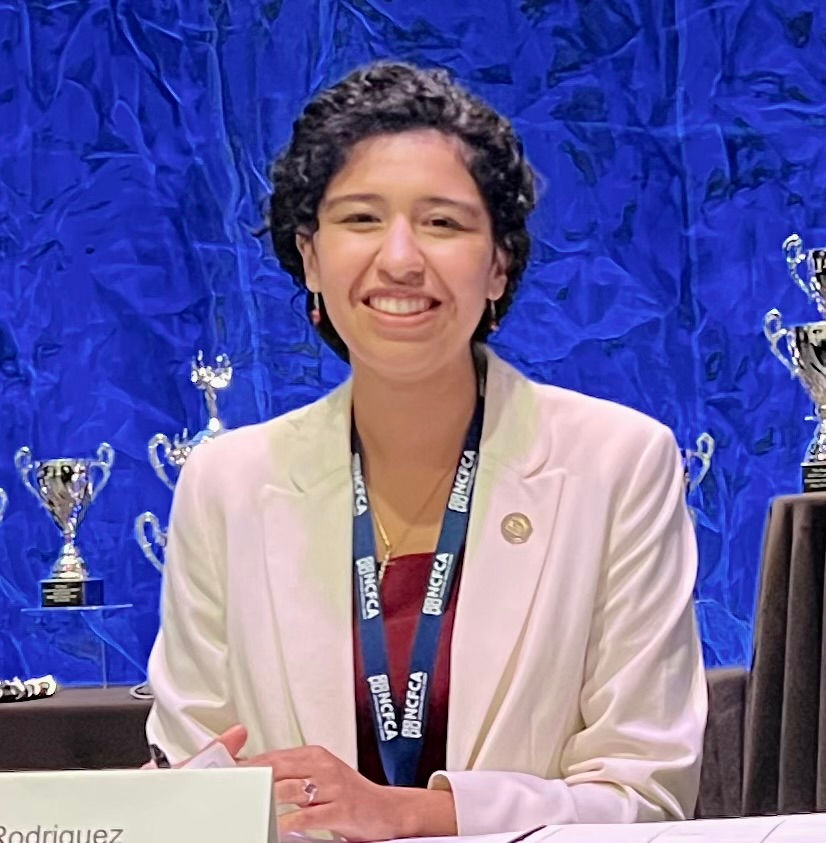
"I qualified to nationals because I memorized a map."
- Brennan Schiltz
- Jun 30, 2025
- 4 min read
by Brennan Schiltz, NCFCA Alumnus
I know what you’re thinking. Brennan power-tags his articles like he power-tagged in debate (at least I am self-aware). Learning the moral in this story won me more than just a national’s slot at an online mixer - it also helped me at nationals beating cases I had never heard of before. I remember finishing my junior year, when my partner pointed out that we had not lost a round “without a brief” that season, even though we’d debated over a dozen rounds with no specific evidence about our opponents' cases going in.
Before I jump into my story, I want to specify that though this is a lesson I learned in the trenches of Team Policy debate, it applies to Lincoln-Douglas and life as well!
The European Union year brought a challenge for every debater. If you’re not familiar with it, I’ll explain briefly. NCFCA had decided to do something in policy debate that no NCFCA student had experienced before. Instead of asking us to debate about United States reform, we were asked to evaluate policy decisions about 27 member states on an entirely different continent. I was 17 years old; I knew nothing about EU politics, how their government was structured or even why immigration was an issue for them.
At the onset of the year the task was simple; figure out as much about the EU as possible. I was desperately afraid of saying something wrong as AFF when asked questions in CX by NEG. Further, I was more afraid of saying, “I don’t know.” Thus sparked a focus on understanding the entire system of the EU. Halfway into the year, I didn’t realize how much that understanding was helping me win rounds, tournaments even.
When I say "system" I mean the general knowledge required to understand as much as possible about the focus of the rez: the European Union. That meant geography, economics, shipping, police, militaries, governments, leaders, trade policy, immigration policy, national constitutions...you get the idea.
It was finals at an online national mixer and I didn’t know my opponents; worse I had no clue what case they where running. The 1AC was complex yet well communicated; it sounded like a great idea, but I knew that there had to be problems. Five years later I don’t remember all the details but the case was in reference to two nations and the plan was trying to rectify problems between those countries. How’d the map play in? I had memorized EU geography as part of my study of the "system" and it turns out the policy AFF wanted to implement wouldn’t work because the nation that they were referencing was on the other side of an ocean --- something the team didn’t know when I asked them in CX.
Moral of the story: general knowledge wins rounds. Don’t get me wrong, knowing the details is super important, but without general knowledge you can’t contextualize the potential problems. And without context you can’t make decisions. Every AFF case is correct in theory. Put it in the real world with real everyday hurdles, not so much. Sometimes it’s as simple as a map revealing the geography, other times it's knowing which EU member states ignore which type of polices (solvency and political disadvantage). Sometimes it's knowing that the bureau of prison guards sell contraband to prisoners (enforcement critique).
So, here’s the challenge in the preseason. Don’t just learn and understand the cases. Understand the entire system of the resolution. If you’re in LD figure out if there are times we have rejected a system of thinking in the past. Think beyond the terms of applications in an AC. Having a rich understanding of history and more that shows your side of the resolution is the “independent variable” and when you take it away, the system collapses.
Here's another example of preseason prep as a game changer...
My senior year the unexpected happened. My team policy partner and I had settled into a nice groove. We had good negative strategies and an AFF case that was appealing to a wide audience and averaging around 70-80% win rate per tournament. We knew the case had flaws, but we knew with that win margin it was best to stay with the case. Things were going smoothly until one final round at a national mixer we got beat – and beat bad.
The funny part about policy is that when an AFF case loses like that it sort of builds a "precedent" against it; where it becomes harder to convince judges. Why? Every round we're debating teams with the best version of the negative against our AFF. It happens because people share the best strategies against good cases and at that point you are forced to adapt.
With weeks before regionals, we were looking at switching our case. We knew our goal --- winning the tournament --- and we could do the math. AFF cases overall had higher win rates that year which meant winning NEG was harder. If we didn’t have a good AFF case, we’d be at a strategic disadvantage.
Now there is no perfect case; there’s simply preparation or lack of it.
In the end, our preseason preparation had made it so that we had plenty of backup ideas to choose from. In those few weeks before regionals we weren’t deciding between random google searched ideas and sourcebook cases. Way back at the beginning of the year, my partner and I had built out several other cases. When we had to make the switch we already had working knowledge of what we were going to be arguing. We had two rounds we lost while we were still figuring out strategy, then after that the case didn’t drop a ballot including out rounds at regionals and nationals!
We worked super hard throughout that season, learning from our mistakes and adjusting our strategies along the way. But the key was the preseason; the time spent learning the system contained in the rez and preparing several viable cases. Basic knowledge, strong research, and early case development took us all the way to Nats and a 5th place finish.
So dig in, read a lot, have fun, and I'll see you out there.